.jpg)
Saturday, December 21, 2013
Christmas Services
Our Christmas Eve service is at 7:30 pm Tuesday, December 24, and our Christmas Day service is 10:30 am on Wednesday, December 25. Please join us as we give thanks to God for his coming among us in Jesus our Lord!
.jpg)


Sunday, December 15, 2013
Sermon for the Third Week in Advent
Grace and
peace to you from him who was, and who is, and who is to come. Amen
Lord, give
me patience, and I want it NOW!
There are
few among us that can say that we are patient.
And those
that can say we are patient may need to work on our humility.
Sunday, December 8, 2013
Sermon for the Second Week of Advent
Advent
2C
December
8, 2013
St
Stephen Lutheran Church
Pastor
Maurice Frontz
Grace and
peace to you from God our Father and the Lord Jesus Christ.
As most of
you with any access to a television set, a computer, a radio, or a newspaper
will have
known by now,
Nelson
Mandela died this past week at the age of 95.
He began
his political career as a revolutionary
against
the apartheid government of South Africa
which kept
whites, known as ‘Afrikaaners’ in a superior place
and
deprived black-skinned South Africans of their civil and human rights.
From 1962
to 1990, Mandela was jailed by the apartheid government
for crimes
against the state of South Africa.
In 1990,
when he was set free from prison,
he led not
a violent revolution, as he had espoused in the past,
but
instead a peaceful revolution,
negotiating
with the white government of South Africa to end apartheid
and beginning
a peaceful transition to a democracy in which all South Africans could
participate.
When he
became President of South Africa in 1994,
instead of
retaliating against those who had kept him in jail
and the
anti-apartheid system in place,
he reached
out to white South Africans,
including
them in his cabinet.
He oversaw
the formation of a ‘Truth and Reconciliation Commission’
which
investigated crimes in the apartheid era
both by
the pro-apartheid government
and the
African National Congress,
and which
extended pardons in exchange for truth-telling.
At his
death, both blacks and whites in South Africa
celebrated
his life,
and the
current president of South Africa said,
‘We have
lost our father.’
Certainly
the life of Nelson Mandela bears much reflection.
But I
speak of him today not to eulogize him
but to illustrate
a truth:
Nelson
Mandela, upon his release from 27 years as a political prisoner,
understood
that there was but one way forward
for his
country and for himself:
that was
the way of forgiveness and reconciliation.
He, and
the Black majority of South Africans,
could not
be satisfied with simply gaining control of the nation,
and
replacing the minority as the group in power;
there
needed to be a revolution in their hearts as well.
As he
famously said,
“As I walked out the door toward the gate that would lead to
my freedom,
I knew if I didn't leave my bitterness and hatred behind,
I'd still be in prison.”
Because he gained the
knowledge of this truth,
he was able to shape a
South Africa
that is today at
prosperous and at peace.
Think of the alternative:
continuing violence, terrorism, and struggle,
which we see in so many parts of the world,
and which simmers in other places, including in our country.
This is why Mandela is being mourned as a hero today,
not because he came out on the winning side,
but because he made sure that the victory was not simply for
his own people,
but for all South Africa’s people.
Two thousand years ago,
there was another man who called his people to repentance.
He said that there was no alternative to an inner
transformation,
because God was coming in power.
This man we remember especially in Advent,
and we know him as John the Baptist.
He did not lead a peaceful revolution,
but he was put in jail.
Unlike Mandela, he did not come out as a hero,
but was executed in jail.
Yet while he was free,
John the Baptist preached a message of truth and
reconciliation;
not just with fellow human beings,
but with God himself.
His message was that those who would be on God’s side when he
came in power
must confess their sins and that they would receive God’s
forgiveness.
He assured them that God was coming to save his people.
And yet when the Pharisees and Sadducees came for baptism,
John was uncompromising.
This is no way to gain adherents,
to call people coming to you ‘a brood of vipers.’
But John could see that here were people coming out to
receive baptism
that were not prepared for an inner transformation.
They wanted the outer washing,
but would not submit to a through and through cleansing.
They trusted that since they had Abraham as an ancestor,
their place in God’s future was assured.
John called them ‘brood of vipers’
not simply to condemn them, but to warn them
not to put their trust in their own righteousness,
but in God’s ability to change them.
He understood that God was not interested in your race,
but in your heart.
And yet is it only the clean heart that can receive God?
It is the heart that believes that it is not yet fully
cleansed,
but can pray with the sinful King David,
‘Create in me a
clean heart, O God,
and renew a right spirit within me.’
This kind of heart God can work with.
This is the preparation for Christ’s advent,
an awaiting of God,
a casting aside of pride and self-congratulation
and an embracing of humility and expectation,
waiting with a heart that expects God to work,
a heart that seeks God’s bringing forth of good fruit.
In the Small Catechism,
Blessed Martin Luther asks:
What
then is the significance of such a baptism with water?
and answers:
‘It signifies that the old creature in us with all sins and
evil desires
is to be drowned and die through daily contrition and
repentance,
and on the other hand that daily a new person is to come
forth and rise up
to live before God in righteousness and purity forever.’
And so no one is exempted from the call to repent,
even those who have repented before.
This is important, I think,
because we are apt to think of repentance
as something that we should do after only the most serious
sins.
A murderer, perhaps, ought to repent; or a terrorist;
or an adulterer, or a child molester,
or an embezzler, or a slanderer.
Ordinary, decent folks like us need no repentance.
Moreover, I think that most of us feel that we are somehow
exempted
from seeking God’s inner transformation.
We may believe that we are too old,
or perhaps we think we are too young
or perhaps we believe we are too busy.
Those who have been in the church a long time
may think they’ve done enough repentance over the years.
But Luther’s teaching reminds us that repentance, or turning
around toward God,
is never over,
but is constantly seeking God’s will at this moment in our
lives,
whatever that moment may be.
Repentance is not an isolated event in the Christian life,
it is the Christian
life.
Being open to God’s inner transformation,
that he might conform our lives to Christ’s,
is a daily call and a daily prayer.
So as the world celebrates Nelson Mandela
and his transformational embrace
of reconciliation and forgiveness for a nation,
we in the Church celebrate with them
and we point to John the Baptist’s call for transformation.
We desire for God to transform us
that we might be salt and light in the world,
proclaiming and living out the good news of Jesus Christ,
the Gospel that brings all people of every race, nation, and
clan
within the reach of his saving power.
Let us be people who hear this call,
for he who has come is coming still,
and we live by his Spirit
which he has given us:
the spirit of wisdom and understanding,
the spirit of counsel and might,
the spirit of knowledge and the fear of the LORD,
the spirit of joy in his presence.
Amen
Sunday, December 1, 2013
Sermon for the First Sunday of Advent
1992 was a
watershed year for American television.
That year the
cable channel MTV began airing a program called The Real World.
The cast
members, all eighteen to twenty-five, were chosen by audition
to live in
a house with six other strangers
for
several months at a time,
while
cameras monitored their every move.
The best
and most dramatic moments were edited, spliced together,
and aired
in hour-long segments for the entertainment of viewers,
mostly
also aged eighteen through twenty-five.
Largely
credited with starting the genre of reality TV,
The Real World still airs to this day,
and it is
credited by some with allowing people to ‘get real’
with
topics such as sexuality, religion and politics, and prejudice.
One
wonders how slapping seven strangers
into a
house which they don’t pay for,
giving
them trips to exotic places which they don’t pay for,
and
recording their every move for an eager audience
approximates
the real world.
But for
some reason, the show was a hit,
perhaps
telling us less about the actors and more about the audience,
perhaps
telling us about ourselves.
From The Real World, we were given plenty
more opportunities
to watch
other people’s lives and comment on them to our families and friends.
Who was
more at fault, Jon or Kate?
Was it
right for them to be putting their kids on TV all the time?
Who should
be voted off the island or exiled from the house,
and who
should pack his knives and go home?
With the
coming of text messaging,
reality TV
producers learned the revenue potential of giving us a vote.
Who should
advance to the next round?
You
decide, America!
Some of
you or even most of you may not watch these kind of shows.
But from
the fact that they are produced and shown,
we can
learn something about the world we inhabit.
It is a
world that loves drama, loves competition;
it loves
to cast people into two categories: winner and loser;
it
believes that things are better
when there
is less social convention and more ‘honesty.’
It loves
to judge and it loves even more
when there
is an opportunity to participate in judgment.
Is this
the ‘real world?’
Do these
television shows depict for us how the world ‘really’ is?
Or is
there another reality beyond the drama and the backbiting
and the
conspicuous consumption and the product placement
and the
survival of the fittest?
We
Christians are often accused of refusing to live ‘in the real world.’
But it was
not only recently, but fifteen hundred years ago
that this
saying was attributed to St Antony the Great:
‘A time is coming when men will go mad,
and when they see someone who is not mad,
they will attack him, saying, "You are mad;
you are not like us."
Is it not
madness when people agree to live their lives for other’s entertainment?
Is it not
madness when we cannot be bothered with human trafficking
but are
obsessed with Thursday’s TV lineup?
Is it not
madness when our desire for cheap stuff
outweighs
our desire to give thanks?
Do we not
have our own personal madnesses,
our
addictions, some of them trivial, some of them not;
our
fantasies, our escapes from reality,
our ways
of controlling our realities so that nothing uncomfortable will happen to us?
If this is
the real world, there is reason to throw up our hands in despair.
But in
opposition to all of this,
Advent
announces the coming of the real world.
The real
world is wholly different from the so-called ‘real world.’
The real
world is the one where God is judge and no other,
and his
judgment is tempered with mercy.
It is the
world where conflict gives way to community;
where
swords are beaten into plowshares
and
nations do not go to war against each other any more.
Isaiah
says of this world:
‘In days
to come
the mountain
of the LORD’s house
shall be
established as the highest of the mountains…
Many
peoples shall come and say,
‘Come, let
us go up to the mountain of the LORD,
to the
house of the God of Jacob,
that he
may teach us his ways
and walk
in his paths.’
This world
is not the present world,
nor can we
make it the present world by our efforts.
Some
preachers act as if the world’s problems all could be solved
if they
could simply make their own congregations feel guilty enough.
But we are
called to walk in the present as if the future was certain,
as if the
world that was coming is the real world now,
as Isaiah
calls to the house of Jacob,
‘Come, let
us walk in the light of the LORD!’
Amidst the
overindulgence and the empty festivity
and the
forced cheer and the frenetic pace
of this
‘Christmas season,’
we who
call ourselves by the name of Christ,
who will
celebrate the ‘Christ mass’ on Christmas Eve or Christmas Day,
we are
called to be Advent people,
looking
beyond this present world
to the
world to come.
We are
called to live the life of the world to come
even as we
live in this world.
We are
called to a life of self-control, as St Paul writes:
we are
called to lay aside the works of darkness
and put on
the armor of light.
We hear
Jesus’ call to be ready for his coming.
This does
not mean to stockpile canned food
or to put
our trust in every crackpot with the date of the Rapture;
neither
does it mean to have everything ready for your holiday celebrations.
It means
to live now as if God was present;
and of
course he is present.
To be
ready for his coming is to live in his presence.
How can we
do this while we live in the world?
For
certainly we love this world of ours,
with all
its electric lights and
with its
beautiful holiday traditions,
its
frantic and fumbling searching after joy,
and its
nuggets of true love buried under the dirt and dust.
To be
ready for Christ’s coming is to understand
that
Christ died for this world, the real world,
that he
longs to transform the entire creation,
that he
longs for us to yield to him
and
receive the love that he so fervently desires for us.
It is this
love that by the power of the Holy Spirit
was made
incarnate of the virgin Mary and was made man.
It is this
love that will come again to transform the world
and grace
it with God’s reality,
a reality
that comes into our lives now by the power of the Holy Spirit.
Let us
walk in the light of the LORD,
who was,
and who is, and who is to come.
Wednesday, November 20, 2013
Sunday sermon posted and (gulp) Pastor Frontz on Twitter
OK, I'm actually going to use my Twitter account, not that I'm expecting a bazillion followers. But if you'd like to do so, I'm at 'Maurice Frontz' on Twitter.
And here's my sermon from Sunday: http://www.ststephenpittsburgh.org/p/most-recent-sermons.html
Just a reminder that you can help those affected by Super Typhoon Haiyan. Click here or scroll down for details.
And here's my sermon from Sunday: http://www.ststephenpittsburgh.org/p/most-recent-sermons.html
Just a reminder that you can help those affected by Super Typhoon Haiyan. Click here or scroll down for details.
Wednesday, November 13, 2013
NALC Responds to Super Typhoon Haiyan - How You Can Help
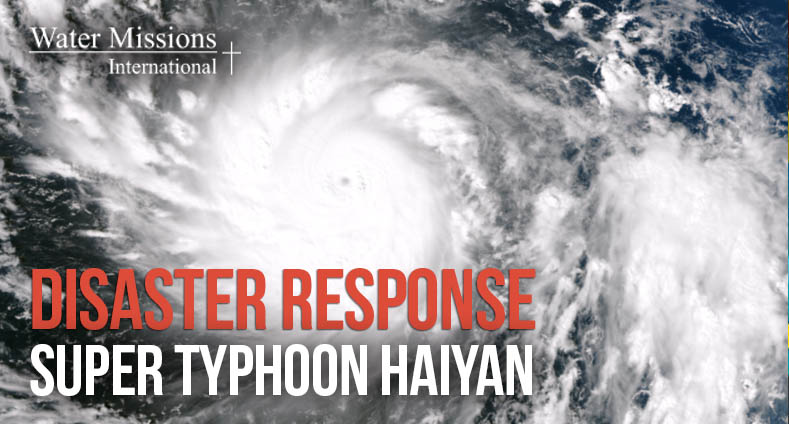
Super Typhoon Haiyan struck the Philippines on the morning of November 8, causing massive destruction, with wind gusts up to 235 mph, nearly 16 inches of rainfall and waves up to 45 feet in some areas. Thousands are dead, and millions more have been affected by the storm.
How you can help
There are several ways you can help respond to the needs of the people of the Philippines.
First and foremost, PRAY for those affected and for all who are working to respond in the aftermath of the storm.
Second, send financial gifts directly to international relief organizations. Two organizations recommended by the NALC are Lutheran World Relief (LWR) and Water Missions International (WMI).
(To give, please follow the link below and click on the appropriate links to LWR or WMI.)
- Pastor Frontz